


JUYE Technology, a TPE thermoplastic elastomer manufacturer with 19 years of experience — provides you with comprehensive R&D and production solutions for TPE, TPR, TPV, TPV-SiR, TPU, and TPEE materials.
Since 2008, we have expanded into a broad range of industry application markets, providing rich solutions for various industries, with numerous application cases for your reference.
The processing and production technology of TPE materials is relatively complex, requiring strict control of the process parameters and operating conditions at each stage.
Juye Technology has gone through nearly 20 years of steady development and has established a comprehensive and thoughtful service support system.
Through the media information channel, you can get the latest updates on JUYE Technology Company's development and industry news in the first time. The FAQ and video center allow you to better explore the world of TPE materials.
JUYE Technology's sustainable development aims to carry out low-carbon production under the premise of protecting the Earth's green environment, participate in global economic cooperation and innovation practices, establish harmonious and symbiotic relationships with partners, contribute to the country, promote the development of the enterprise, and seek welfare for employees.
Dongguan JUYE Plastic Technology Co., Ltd. is a TPE thermoplastic elastomer company integrating research and development, production, and sales.
This is an article from Baidu Baike. I have encountered similar situations before. The customer uses TPR and requires the surface of the TPR product to be glossy, but not too shiny. Roughly, it means there should be an obvious luster, but it should not be obvious that some additives have been added. So, TPR products injection molding

This is an article from Baidu Baike. I have encountered a similar situation before. The customer uses TPR and requires the surface of TPR products to be glossy, but not too glossy. The general meaning is that it should have a very obvious luster, but without appearing to have added any additives. Regarding the problem of lack of gloss in TPR injection molding, I have summarized nine causes and solutions.
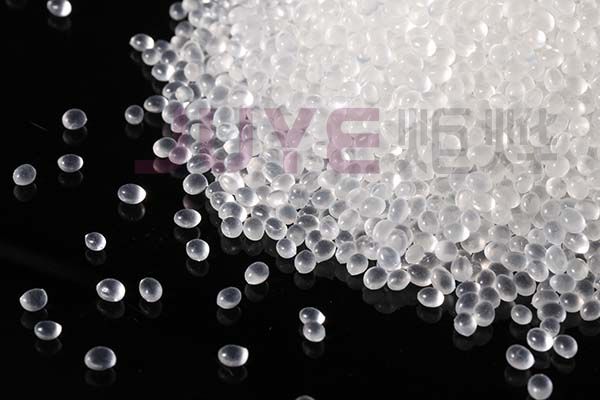
(1) Excessive injection speed and prolonged material residence time can also cause a decrease in product surface gloss.
Solution: Reduce injection speed and shorten residence time.
(2) Poor thermal stability of the material leads to thermal decomposition.
Solution: Use materials with good thermal stability and gloss, or add heat stabilizers to the material.
(3) Low barrel temperature and excessively low nozzle temperature can also lead to a decrease in product surface gloss.
Solution: Increase nozzle temperature and melt temperature.
(4) Low mold temperature and excessively fast cooling speed cause a hard shell to form on the cavity wall while the melt is still filling. The shell layer is subjected to various forces, turning it white and cloudy, reducing the surface gloss of the product.
Solution: Increase mold surface temperature, reduce cooling speed, or use local heating at the mold gate.
(5) Poor mold surface finish results in a matte product surface.
Solution: Choose carbon tool steel, carefully polish the mold surface, and improve the mold surface finish.
(6) Excessive use of mold release agent can also cause such defects on the product surface.
Solution: Try not to use or use only a small amount of mold release agent, and apply it evenly.
(7) Insufficient back pressure during plasticizing causes uneven plasticizing of the material, and poor mixing of material and colorant leads to uneven color on the product surface.
Solution: Increase back pressure appropriately.
(8) Impurities in the material and insufficient drying can also reduce product surface gloss.
Solution: Remove impurities, fully dry the material, and if necessary, add a hopper dryer.
(9) Excessively small runner and gate dimensions, as well as poor venting, can also cause poor surface gloss of the product.
Tell us about your application and requirements. Our team will help you evaluate suitable grades.


