JUYE Technology, a TPE thermoplastic elastomer manufacturer with 19 years of experience — provides you with comprehensive R&D and production solutions for TPE, TPR, TPV, TPV-SiR, TPU, and TPEE materials.
Since 2008, we have expanded into a broad range of industry application markets, providing rich solutions for various industries, with numerous application cases for your reference.
The processing and production technology of TPE materials is relatively complex, requiring strict control of the process parameters and operating conditions at each stage.
Juye Technology has gone through nearly 20 years of steady development and has established a comprehensive and thoughtful service support system.
Through the media information channel, you can get the latest updates on JUYE Technology Company's development and industry news in the first time. The FAQ and video center allow you to better explore the world of TPE materials.
JUYE Technology's sustainable development aims to carry out low-carbon production under the premise of protecting the Earth's green environment, participate in global economic cooperation and innovation practices, establish harmonious and symbiotic relationships with partners, contribute to the country, promote the development of the enterprise, and seek welfare for employees.
Dongguan JUYE Plastic Technology Co., Ltd. is a TPE thermoplastic elastomer company integrating research and development, production, and sales.
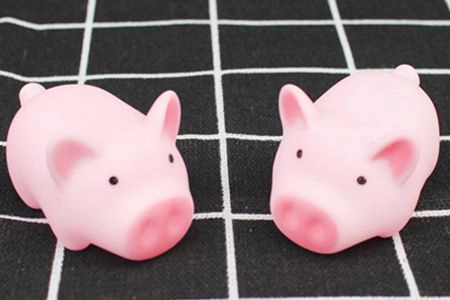
Juye provides TPE/TPR materials for injection-molded toy figures and soft rubber toys. Solve surface oil, strong odor, and easy tearing issues, and pass toy safety standards such as EN71 an

TPE elastomer soft gel can be adjusted to appropriate hardness according to product property requirements (hardness range Shore 25-90A),
Transparent TPE material, due to its high light transmittance, requires strict surface quality of material products, without any defects such as streaks, pores, whitening, halos, black spots, discoloration, poor gloss, etc. Therefore, throughout the injection molding process, strict and even special attention must be paid to TPE raw materials, equipment, molds, and even product design.
Styrenic transparent TPE is widely used in the footwear industry, largely replacing rubber; at the same time, its applications in industrial rubber products such as rubber sheets and plates are also expanding.
Thermoplastic Elastomer

TPE overmolding injection bonding generally adopts the two-shot injection molding process, which fixes the injection molded hard plastic part on the overmold,
TPE is a classic aggregation-induced emission molecule, meaning it has no fluorescence in solution but strong fluorescence in solid state. Therefore, transparent TPE materials also have important applications in organic optoelectronics and other fields.
Transparent TPE, specifically is a thermoplastic elastomer, while TPR is translated from English, strictly speaking it is called thermoplastic rubber. This is the most basic difference. TPE is generally modified from SEBS base material, while TPR is modified from SBS base material.
Thermoplastic Elastomer

TPE material has good fluidity and is mainly injection molded.
The thickness of the TPE/TPR overmolding layer. In most overmolding applications, a wall thickness range of 1.5-3.0mm will ensure good adhesion. If the TPE layer is too thin, injection molding is difficult, adhesion strength is low, and the feel is poor. If the TPE layer is too thick, on the one hand, the cost is high, and on the other hand, defects such as shrinkage and bubbles are prone to occur.
To achieve the matte appearance of thermoset rubber, a rougher mold surface is required. Generally speaking, the rough surface produced after electrical discharge machining (EDM) of the mold cavity will produce an excellent workpiece appearance and make demolding relatively easy. Abrasive methods such as steam blasting, sandblasting, or shot blasting, as well as chemical etching, can also be used to produce surfaces with different gloss and appearance.
Thermoplastic Elastomer

1. Effect of temperature
Different TPE materials have different sensitivities to temperature. For example, when measuring the melt flow index, you can test at several temperatures. If the melt flow index varies greatly, it indicates that the viscosity of the TPE material is highly sensitive to temperature, making it suitable for extrusion materials.
2. Effect of low molecular weight additives
Low molecular weight additives can reduce the interaction force between macromolecular chains, thereby reducing viscosity and making it easier to fill the mold. This is easy to explain: small molecule additives can be understood as added mineral oil.
3. Effect of molecular weight
The same TPE material can have different molecules and molecular weight distributions. The larger the molecular weight, the stronger the intermolecular force, and the higher the viscosity. When the molecular weight is the same, a narrower molecular weight distribution often results in lower viscosity. For example, TPE base material YH503T has higher viscosity than YH502.
4. Effect of shear rate
Effectively increasing the shear rate of plastic can reduce the melt viscosity, but different plastics are affected differently by shear rate. When measuring the melt flow index, you can test at several pressures. If the melt flow index varies greatly, it indicates that the material viscosity is highly sensitive to shear, making it suitable for injection molding materials.
5. Effect of pressure
Although high injection pressure can increase injection speed and achieve high shear during the injection process, which seems beneficial for reducing viscosity, from a physical perspective, increasing pressure actually increases the melt viscosity. The reason is simple: there is already excess space between macromolecular chains due to intermolecular forces. Increased pressure reduces the distance between molecules, making the movement of molecular chains more difficult, thus increasing the overall flow viscosity.
1. From the material perspective:
1. Reduce the oil filling degree of the material;
2. Increase the filler percentage of the material;
3. Find suitable polypropylene and other plastic continuous phases.
2. From the TPE injection molding process:
1. Reduce the injection temperature;
2. Reduce the mold cooling temperature;
3. Increase the injection pressure;
4. After demolding, place the product directly in cooling water.
In fact, the Chinese name of TPE is thermoplastic elastomer, also known as thermoplastic rubber. It is a material that can be directly processed and molded without vulcanization, and has rubber elasticity. Currently, domestic TPE manufacturers are mainly divided into styrene-based thermoplastic elastomer SBS, thermoplastic polyurethane TPU, thermoplastic polyolefin elastomer TPO, polyester elastomer TPEE, etc. Next, let's take a look at the differences between these types!
1. Thermoplastic polyester elastomer TPEE
TPEE (thermoplastic polyester elastomer) is a block copolymer containing polyester hard segments and polyether soft segments. TPEE has the elasticity of rubber and the strength of engineering plastics; the soft segments give it elasticity, making it like rubber, and the hard segments give it processability, making it like plastic. Compared with rubber, it has better processing performance and longer service life; compared with engineering materials, it also has high strength, but better flexibility and dynamic mechanical properties. TPEE can withstand low and high temperatures, and can be used for a long time under conditions of -40 to 160°C. TPE has excellent chemical resistance, weather resistance and aging resistance. It is mainly used where shock absorption, impact resistance, flex resistance, sealing and elasticity, oil resistance, chemical resistance and sufficient strength are required. Such as: polymer modification, automotive parts, high and low temperature resistant wire sheaths, hydraulic hoses, shoe materials, transmission belts, rotomolded tires, flexible couplings, sound absorption, elevator slides, anti-corrosion, wear-resistant, high and low temperature resistant materials, etc.
2. TPU
TPU is made by blending polypropylene PP and ethylene propylene diene monomer rubber (EPDM). During the blending process, EPDM rubber is distributed as a dispersed phase in the PP continuous phase. At the same time, during the blending of PP and EPDM, EPDM itself begins to vulcanize, and this process is called dynamic vulcanization. The self-vulcanization of EPDM does not affect the injection molding of TPV because EPDM exists as a dispersed phase; on the contrary, the presence of vulcanized cross-linked EPDM enhances the wear resistance, strength, and acid/alkali corrosion resistance of TPV, etc.
3. SBS
SBS includes styrene-butadiene block copolymer SBS and its hydrogenated polymer SEBS, as well as modified materials of SBS and SEBS: TPS and TPES (Some in the elastomer industry call TPS TPR, and TPES is also called TPE in the elastomer industry, which is different from the general scope of TPE materials). SEBS and SBS elastomers are mostly used for polymer material modification, toughening, and tackifying resins for adhesives, coatings, and inks, while SEBS and SBS modified materials, TPES, TPS, etc. have more flexible and diverse physical properties and hardness, and are therefore widely used in toys, daily necessities, sports and fitness products, automotive supplies, medical devices, shoe materials, wire and cable industries. Because of this, the consumption of styrene-based thermoplastic elastomers is the largest among all TPEs worldwide.
4. TPO
TPO is composed of rubber and polyolefin. Usually, the rubber component is ethylene propylene diene monomer (EPDM), nitrile butadiene rubber (NBR), and butyl rubber; the polyolefin component is mainly polypropylene (PP) and polyethylene (PE). TPO has become the main rubber-plastic material for automobiles and home appliances, with automotive consumption accounting for more than 75% of total output. It is the fastest-growing variety of TPE.
TPE overmolding typically uses a two-shot injection molding process.
Transparent TPE is used in appliance housings, handles, grips, etc. It offers excellent tactile feel, non-slip and labor-saving properties, and is easy to color and process, with a wide design space.
Diene-based transparent TPE, diene-based TPE is mainly an isomer of natural rubber, so it is also called thermoplastic trans-natural rubber. Although its heat resistance and mechanical strength are not as good as rubber, it is widely used in shoemaking, sponge, optical film, and other industrial rubber products due to its good transparency, weather resistance, electrical insulation, and photodegradability.
TPE transparent material manufacturer
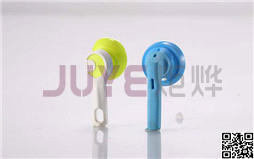
TPE is used in overmolding, with the soft TPE as the outer soft layer.
Transparent TPE is used in stationery, sports equipment, etc. It has good UV resistance, chemical resistance, and is easy to color and process.
Transparent TPE, specifically is a thermoplastic elastomer, while TPR is translated from English, strictly speaking called thermoplastic rubber, which is the most basic difference. TPE is generally modified from SEBS base material, while TPR is modified from SBS base material.
TPE transparent material manufacturer
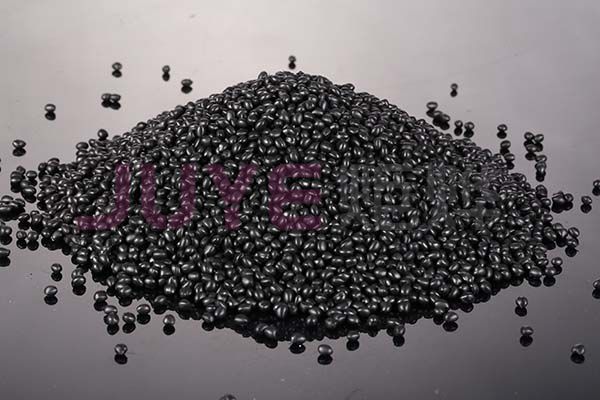
During the molding process of TPE material, during the filling of the mold cavity.
Transparent TPE is used in appliance housings, handles, grips, etc. It offers excellent tactile feel, non-slip and labor-saving properties, and is easy to color and process, with a wide design space.
TPE high-transparency material has different product properties in different applications. Thermoplastic elastomer, also known as TPE material, transparent TPE not only has the processing properties of thermoplastic plastics but also the physical properties of vulcanized rubber. This is the so-called advantageous combination of plastics and rubber. Transparent TPE is widely used in people's daily life and production.
TPE transparent material manufacturer
With the increasingly widespread application of TPE materials, many related enterprises have emerged and established themselves both domestically and internationally in recent years. However, many people do not have a good understanding of the hardness of TPE and do not know how to control it, which has caused a lot of trouble. So, how to control the hardness of TPE? Last time, I shared the shrinkage rate of TPE. Now, the technical staff of Zhongsuwang will share with you how to control the hardness of TPE.
How to control the hardness of TPE:
1. For general TPE, hardness adjustment is done by the content of oil, PP, and calcium carbonate. Increasing the amount of PP or calcium carbonate increases the hardness, and vice versa. Adding oil reduces the hardness.
2. If the oil filling is normal but there is still oil leakage and stickiness, it indicates that the quality of the SEBS/SBS material or the oil is poor. Among all SEBS materials, Kraton has the best oil filling effect, sometimes able to fill up to 10 times its weight.
3. Oil-filled SBS/SEBS tend to turn yellow, mainly because naphthenic oil contains unsaturated double bonds that oxidize and turn yellow. Usually, domestic Karamay naphthenic oil is hydrogenated and will not cause this problem, so be careful when selecting oil.
4. Often, our products have parameters such as hardness, tensile strength, etc. Oil can only reduce hardness and tensile strength, so engineering plastics are usually added as well, such as PP is often added when making TPE. Parameters like hardness and strength can be adjusted according to the amount of PP and oil filling.
5. When filling oil, try to keep stirring or turning. If left to stand, it is easy for TPE/TPR to clump and the oil filling will be uneven. When the oil filling amount is high, the rotation speed should be reduced, as high speed can easily cause the oil already filled in SEBS/SBS to leak out (the principle is similar to that of a washing machine's spin cycle). After oil filling, it is best to let it sit for a while so that the oil is fully absorbed by the SEBS/SBS before production, otherwise, oil leakage may easily occur during production.
Professional technical engineer team-possible fastest response and support to client' application demand.