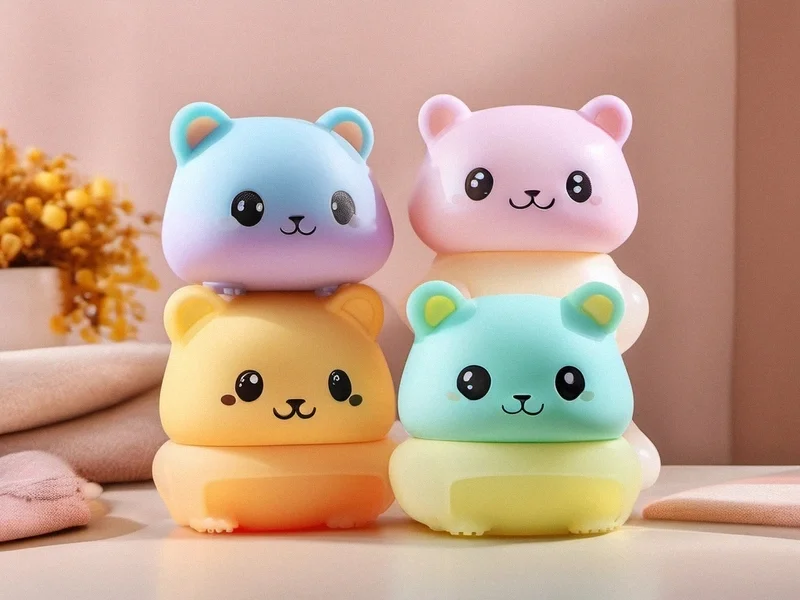
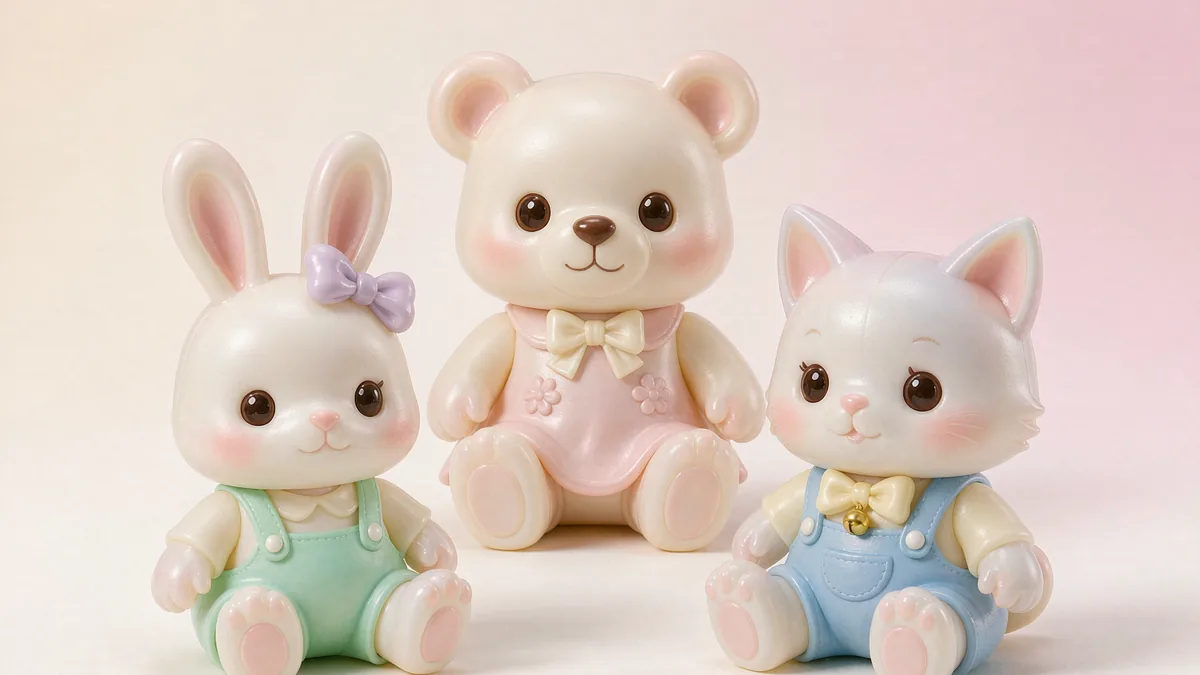
One-sentence answer: TPE is the preferred material for making toy figures: it contains no phthalate plasticizers, does not harden in winter, and feels soft and springy. Its 30–50A hardness range covers most cartoon figures and ornaments, and with two-shot injection molding it can achieve a "hard core + soft outer layer." This article uses a real rectification case to show: after an export toy factory switched its PVC figures to TPE, phthalate-related returns dropped to zero, the customer complaint rate fell from 9% to below 1%, and overall costs actually decreased.
Need material selection, mold evaluation, or sampling for toy figures? Send us your product type, target hardness and feel, and export market, and our technical department will recommend a grade based on your actual needs and send samples free of charge.
Online inquiry / Request samples:
I. Project background: three problems the customer encountered
A factory in Zhongshan, Guangdong that makes export toys mainly produced PVC cartoon figures and ornaments in 2026, selling to European and American gift and mother-and-baby channels. That year it wanted to launch a TPE soft rubber figure line, but got stuck on the material in three places:
- Compliance bottleneckEU and California customers have started checking for phthalates. PVC relies on DINP/DEHP plasticizers to become soft, which is a hard flaw in inspections. A batch of goods was rejected at customs, resulting in a direct loss of 280,000.
- Material selection pain point: Factory procurement does not understand TPE grades and uses 20A general-purpose material meant for pen caps to make figures with ears. As a result, it is too soft, the ears cannot stand up, and a bite leaves a dent that does not recover.
- Experience pain point: The original PVC figures become hard in winter and slip from sweat. Amazon negative reviews repeatedly mention "cheap plastic smell" and "hard in winter."
The factory once considered switching to silicone, but silicone is 2 to 3 times more expensive, and dual-color and overmolding are difficult to do, so the cost could not get past the boss. Later, through a peer introduction, they found us. The goal was to use TPE to solve the three issues of "safety, soft elasticity, and controllable cost" all at once.
2. Material Solution: Why TPE Toy Figures
Let's start with the conclusion: What a figure needs is "squeezable, stands firm, unchanged in winter and summer"
TPE base material is mainly SEBS, which itself contains no phthalates and is softened by oil filling rather than plasticizers, so it naturally passes the safety hurdle more easily than PVC. With the right hardness, the figure can be squeezed for a soft, bouncy feel while the ears and tail stand firm without collapsing. We have created a "one product, one grade" comparison table for the factory, so procurement can order according to the table without confusion. Typical physical properties are as follows (refer to the actual measured grade TDS):
| Performance Item | Recommended Range | Test Conditions | Significance for Toy Figures |
| Hardness (main body) | Shore 30~50A | ISO 48 / ASTM D2240, 23℃ | Match to figure size; the smaller, the softer |
| Rebound rate | ≥45% | ASTM D2632, 23℃ | Snap back quickly when released, feels "bouncy" not "dead" |
| Compression set | ≤30% | ISO 815, 23℃×72h | The lower, the less likely to stay squashed and not recover |
| Tensile strength | ≥6 MPa | ISO 37, 23℃ | Won't crack when dropped during handling |
| Elongation at break | ≥500% | ISO 37, 23℃ | Won't tear under repeated squeezing |
| Tear strength | ≥18 kN/m | ISO 34-1 | Ears, hanging holes and other thin parts won't tear |
| Compliance | EN71-3 / CPSIA / REACH 4P | Third-party | Export baseline |
Table 2-1 Note: The above are typical ranges for SEBS-based TPE used in toy figures. TPE can also be colored—using color masterbatch specially made for soft rubber, you can achieve candy colors, which is where it is more suitable than silicone for making colorful figures.
<\/div>
<\/div>
Compared with PVC / silicone / latex, how should you choose a figurine?
| Material | Safety | Feel and rebound | Cost | Two-color/encapsulation | Application |
| PVC | Poor, phthalates are a major flaw | Hard in winter, slippery | Lowest | Average | Low-end domestic sales |
| Silicone | Excellent | Excellent, but rather expensive | High (2~3×) | Difficult | High-end maternal and infant |
| Latex | Medium, allergenic | Excellent | Medium | Difficult | Balloons |
| TPE | Excellent, phthalate-free | Good, stable in winter and summer | 中 | 易双色/包胶 | 公仔通用 |
Table 2-2 Note: TPE hits the sweet spot of "safety + feel + cost + process" and is the preferred replacement for upgrading PVC figures; silicone is expensive and difficult for two-color molding, while latex carries allergy concerns.
III. Molding Process: How to Inject Figures Stably
Figures have complex shapes (ears, tails, thin legs) and are more demanding on the process than ordinary products. During the sampling stage, we stay at the factory to lock down several key parameters:
- Material temperature 180~210℃: SEBS-based TPE has good flowability; use the middle-to-lower range, as higher temperatures instead cause mold sticking and shrinkage.
- "Mold temperature 30~50℃ (45~55℃ for mirror-finish parts): the figure's surface must be glossy; if the mold surface is not polished, it will cause streaking.
- Holding pressure: shorter is better than longer: excessive holding pressure creates high internal stress, making the rebound feel "dead"; fine-tune according to wall thickness.
- Cooling = wall thickness × 8~12s: uneven wall thickness easily causes shrinkage and deformation; the base of the ears needs to be thickened.
- Two-shot injection molding: for figures with a "hard core + soft outer layer" and teethers with a "hard handle + soft bite", use two-shot molding; the interface should be textured (Ra≥0.4μm) or mechanically interlocked to prevent separation.
- Use color masterbatch specially for soft rubber: ordinary color masterbatch is relatively hard; adding too much causes hardness to drift upward and rebound to become faster, so keep the addition amount to a minimum.
IV. Safety and Compliance: How to Submit for Testing When Exporting to Europe and the US
Toy figures for export cannot avoid three things, and TPE is much less troublesome than PVC in this regard:
- EN71-3: EU toy safety, limits on 19 migratable elements. TPE base material itself does not involve heavy metals; the risk lies in the color masterbatch—using compliant color masterbatch basically passes in one go.
- REACH phthalates 4P:TPE does not contain phthalate plasticizers (soft-touch oil-extended, not phthalate-based); this passes naturally, and it is also the biggest reason PVC factories switch to TPE.
- CPSIA (USA): lead content ≤100ppm + traceability label; TPE is also naturally low in lead.
- GB 6675 / RoHS 2.0: reference for domestic sales; the item logic is close to EN71; RoHS regulates 10 hazardous substances including cadmium.
A reminder: when placing an order, clearly state "for toys, target market"; the manufacturer will recommend a grade according to the standard and attach a test report. This is much less trouble than getting the goods and then arranging additional testing.
V. Real-world cases: let the data speak
Case 1: PVC figures switched to TPE, customer complaint rate dropped from 9% to below 1%
A Dongguan customer previously used PVC figures, and complaints centered on "strong plastic smell, hard in winter, bite marks." After switching to TPE 35A, the feel met standards, and over 3 consecutive months the complaint rate dropped from about 9% to below 1%, with repeat orders clearly rebounding. On cost, TPE unit price is about 10% higher than PVC, but the money saved on returns, negative reviews, and compliance fines far exceeds this difference.
| Metric | Before rectification (PVC) | After rectification (TPE 35A) | Test conditions |
| Phthalates | DINP detected | Not detected (<0.1%) | EN 71-3 / CA65 |
| Rebound rate | — | 52% | ASTM D2632 |
| Compression set | — | 27% | ISO 815, 23℃×72h |
| Winter feel (5℃) | Hard, brittle | Soft, unchanged | Internal control |
| Odor rating | Grade 3~4 (noticeable) | Grade 1~2 (slight) | Sealed jar at 50℃×24h |
| Customer complaint rate (returns/shipments) | 9% | Below 1% | Store backend for 3 consecutive months |
Note for Table 5-1: TPE has a higher unit price than PVC, but the money saved on returns, negative reviews, and compliance fines far exceeds the material price difference; the factory has calculated the overall account, and the comprehensive cost actually decreases.
Case 2: Baby teether, the problem of bite marks not recovering
The customer makes teethers and originally used 20A, which was too soft—one bite from the baby left a dent that would not recover for a long time. We raised the main body to 35A and reduced the oil, so it can be boiled and sterilized at 100℃ (better than PVC) while retaining a soft bite feel; it passed all EN71-3 items in one go, and the report covers the finished product.
Case 3: Two-color figure, the two layers separate
The customer's first batch of two-color figures delaminated after just a few washes. Investigation showed the interface relied only on "adhesion." The fix was to texture the interface (Ra≥0.4μm) and add a mechanical interlocking structure so the soft and hard layers "snap" together; no delamination has occurred in repeat orders.
VI. How to Choose Hardness: A Table to Match by Product
| Product | Body Hardness | Structure/Process | Key Points |
| Cartoon figures/ornaments | 30~50A | Solid/two-color | Uniform wall thickness ±10%, thickened ear roots |
| Squishy toys/stress relief | 20~30A (or OO) | Solid | Slow rebound, low permanent deformation |
| Baby teether | 25~40A | Two-color overmolding | EN71-3 full items, boilable |
| Stretch/rebound toy | 30~50A | Solid/extruded | Tear strength ≥18 kN/m |
| Pretend-play soft accessories | 40~60A | Two-color | Abrasion-resistant and bite-resistant |
Table 6-1 Note: Slow-rebound models (squishy toys) follow a different formulation logic from regular figures; do not apply the same set of parameters.
Further Reading
VII. Frequently Asked Questions
1. What is the biggest difference between TPE figures and PVC figures?
Safety. PVC is softened with phthalate plasticizers, which are a must-check item in inspections for exports to Europe and the US; TPE itself contains no phthalates, and with a SEBS base plus low-migration oils it can pass EN71-3 and CA65, while also feeling more consistent (not hard in winter or summer).
2. Can TPE figures be made in multiple colors?
Yes, and it is convenient. SEBS-based TPE is easy to color; with color masterbatches specially designed for soft plastics, you can achieve candy colors and macaron colors. Note that the masterbatch should be the soft-plastic-specific type and the addition level should be kept to a minimum, otherwise hardness will drift upward and rebound will become faster.
3. Will the two layers of a two-color figure come apart?
Yes, if it relies only on "adhesion." The correct approach is to texture the surface (Ra≥0.4μm) or use a mechanical interlock structure so the soft layer and hard layer "snap" together, rather than relying on purely chemical bonding.
4. Can TPE be used for baby teethers?
Yes, and it is suitable. Choose a food-contact grade that passes all EN71-3 requirements, with a hardness of 25~40A, and it can be sterilized by boiling in water at 100℃. The report must cover the finished product, not just the raw material.
5. Can existing PVC molds be directly switched to TPE?
Most likely they need modification. TPE has a higher shrinkage rate (1.5~2.5%) than PVC, and requires higher mold temperature and venting; directly switching materials often results in short shots, flow marks, and undersized dimensions. We recommend running 3~5 trial molds first, and we will provide a "mold modification checklist."
6. Will TPE figures have a plastic smell?
Choosing low-precipitation grades means basically no odor or low odor, with no obvious off-smell when the bag is opened—far better than PVC's "cheap plastic smell"—which is also one reason there's one fewer negative review on Amazon.
Conclusion
Back to the three questions for that factory: compliance is solved by "phthalate-free TPE + oil report," material selection is solved by the "figure hardness matrix," and experience is solved by "SEBS-based material stable in winter and summer." TPE is not a universal material, but it is one of the few materials for toy figures that can simultaneously cover all four things: safety, soft bounce, cost, and processability. Match by hardness and run through the verification checklist, and you basically won't take wrong turns.
Need material selection, mold-opening evaluation, or sampling for toy figures? Send us the product type, target hardness and feel, and export market, and our technical department will recommend grades based on actual needs and send free samples.
Related Reading
A few articles directly related to this content, arranged in the order of "what to read first, what to read later":
在线咨询
如果你的玩具公仔也卡在"合规 / 选型 / 手感 / 双色脱开"上,把下面 6 项信息发给我们,技术部会在 1 个工作日内给出初步判断,需要试样的 3~5 天寄出(每个牌号 2kg 起,附 TDS 与检测报告):
- 产品类型(公仔 / 摆件 / 牙胶 / 捏捏乐…)
- 目标硬度与手感(软弹 / 慢回弹 / 立得住)
- 现有材料牌号与具体症状(附不良品照片)
- 模具状态:已开模还是待开模,能否改模
- Export markets and regulatory checklist (EN71-3 / CPSIA / REACH / phthalates 4P)
- Monthly demand and lead time
Contact Information
Support we can provide: grade selection, sample analysis, mold modification suggestion list, small-batch proofing, mass production consistency tracking. We don't do "send you a grade and let you try it yourself" — the feel of a figure is made by molding, not by quoting.
Related Tags
About the Author of This Article
This article was written by the technical team of Dongguan Juye Plastic Technology Co., Ltd., which specializes in TPE / TPR / TPV / TPU / TPEE / TPV-SIR pellets, used in artificial flowers, toys and baby and child products, electronics and home appliances , power tools , sports equipment , pet toys, stress-relief toys, two-shot molding , overmolding, and other major application areas.
The data in this article, such as hardness, rebound rate, compression set, and tear strength, are all quoted from measured values or typical ranges under standards such as ISO 48, ASTM D2632, ISO 815, ISO 37, and ISO 34-1. Specific grades are subject to the supplier's TDS. For material selection advice, grade samples, and quotations, please contact Ms. Zhang at 13827205072