Select Language

PRODUCTS

JUYE Technology, a TPE thermoplastic elastomer manufacturer with 19 years of experience — provides you with comprehensive R&D and production solutions for TPE, TPR, TPV, TPV-SiR, TPU, and TPEE materials.

Classification by Material
Classification by Application Field
By Process Classification

MARKETS

Since 2008, we have expanded into a broad range of industry application markets, providing rich solutions for various industries, with numerous application cases for your reference.

Industry Solutions
Application Case Studies

SYNTHESIS

The processing and production technology of TPE materials is relatively complex, requiring strict control of the process parameters and operating conditions at each stage.

Synthesis Process

SERVICES

Juye Technology has gone through nearly 20 years of steady development and has established a comprehensive and thoughtful service support system.

MEDIA

Through the media information channel, you can get the latest updates on JUYE Technology Company's development and industry news in the first time. The FAQ and video center allow you to better explore the world of TPE materials.

SUSTAINABILITY

JUYE Technology's sustainable development aims to carry out low-carbon production under the premise of protecting the Earth's green environment, participate in global economic cooperation and innovation practices, establish harmonious and symbiotic relationships with partners, contribute to the country, promote the development of the enterprise, and seek welfare for employees.

ABOUT

Dongguan JUYE Plastic Technology Co., Ltd. is a TPE thermoplastic elastomer company integrating research and development, production, and sales.

Publication: 2026-07-24View: 277
HOME > MARKETS > Application Case Studies > Toy Figurine > What Soft Rubber Toys Is TPE Suitable For? Application Cases of 6 Types of Figures and Interactive Toys

What Soft Rubber Toys Is TPE Suitable For? Application Cases of 6 Types of Figures and Interactive Toys

What soft rubber toys is TPE suitable for? From cartoon figures, squeeze toys, and baby teethers to stretchable interactive toys, this article systematically explains the material selection, hardness, and compliance key points for 6 types of soft rubber toys, with real customer rectification cases and a selection comparison table.
Table of Contents

One-sentence answer:TPE is suitable for soft plastic toys that need to be "soft, safe, and able to rebound": cartoon figures/ornaments, squishy/slow-rising stress-relief toys, baby teethers/soothers, stretch-and-rebound interactive toys, soft rubber balls, and soft play-set accessories—these 6 categories are the most common. The core requirements are hardness 20~60A, rebound rate ≥45%, phthalate-free 6P, and passing EN71-3/CPSIA. This article uses a real rectification case to illustrate: after an export toy factory switched from PVC figures to TPE, phthalate-related returns dropped to zero, and the complaint rate fell from 9% to below 1%.     


  •  If your soft plastic toys are also stuck on "compliance / material selection / feel," send us the following 6 pieces of information, and the technical department will give a preliminary assessment within 1 working day. Samples that need to be tested will be sent out in 3~5 days (minimum 2kg per grade, with TDS and test reports):  Online inquiry / Request samples


  • I. Project Background: Three Problems the Customer Encountered


    A factory in Guangdong that makes export toys focused in 2026 on PVC cartoon figures and squishy toys, selling to gift and maternal-infant channels in Europe and the US. That year they wanted to expand into the soft rubber toy line, but ran into three sticking points with materials:


    The factory once considered switching to silicone, but silicone is 2–3 times more expensive, and dual-color and overmolding are difficult to do, so the cost could not get past the boss's approval. Later, through an introduction from a peer, they found us. The goal was to use TPE to solve three things at once: "safety, soft bounce, and controllable cost."

    II. How We Solved It: Four-Step Review and Results Comparison


    Step 1: Material Replacement Assessment — Start with the Compliance Calculation


    We went through the materials of the factory's existing 6 SKUs one by one, and the conclusion was: 5 of the 6 categories are suitable for direct replacement with TPE; only the "high-temperature bite type" is not recommended. The key judgment is that TPE itself does not contain phthalates, but the risk lies in the color masterbatch and oils — so all the grades we provide come with "phthalate-free 6P + low migration" oil reports, blocking the risk at the source.

    Step 2: Provide a Hardness Matrix by Category


    <\/b><\/h3><\/div>
    6 types of toys correspond to different hardness, rebound, and process windows; one material cannot cover all. We created a "one product, one grade" comparison table for the factory, so procurement can place orders according to the table without confusion.<\/div>

    <\/div>

    Step 3: Sample Verification<\/b><\/h3>


    <\/b><\/h3><\/div>
    Using the same mold and process, produce 50 pieces of each for full testing (rebound rate, compression set, drop, aging, compliance). See the table below for data.<\/div>

    <\/div>

    Step 4: Compliance Clearance + Packaging Improvement<\/b><\/h3>


    <\/b><\/h3><\/div>
    Complete EN71-3, CPSIA, and RoHS reports according to the export market; change the figures from self-sealing bags to blister trays to avoid customer complaints about compression deformation.<\/div>

    <\/div>
    Indicator<\/b><\/td>Before Rectification (PVC)<\/b><\/td>After Rectification (TPE 35A)<\/b><\/td>Test Conditions<\/b><\/td><\/tr>
    Phthalates<\/td>DINP detected<\/td>Not detected (<0.1%)<\/td>EN 71-3 / CA65
    Rebound rate—52%ASTM D2632
    Compression set—27%ISO 815, 23℃×72h
    Winter feel (5℃)Hard, brittleSoft, unchangedInternal control
    Odor ratingGrade 3~4 (noticeable)Grade 1~2 (slight)50℃×24h sealed jar
    Complaint rate (returns/shipments)9%Below 1%Store backend for 3 consecutive months
    Material cost per unitBaseline+0.12 yuanMaterial price higher but saved on returns

    Table 2-1 Note: TPE unit price is higher than PVC, but the money saved on returns, negative reviews, and compliance fines far exceeds the material price difference; the factory has calculated the total account, and the overall cost actually decreases.


    III. Which Soft Plastic Toys Is TPE Suitable For: Breaking Down 6 Categories One by One


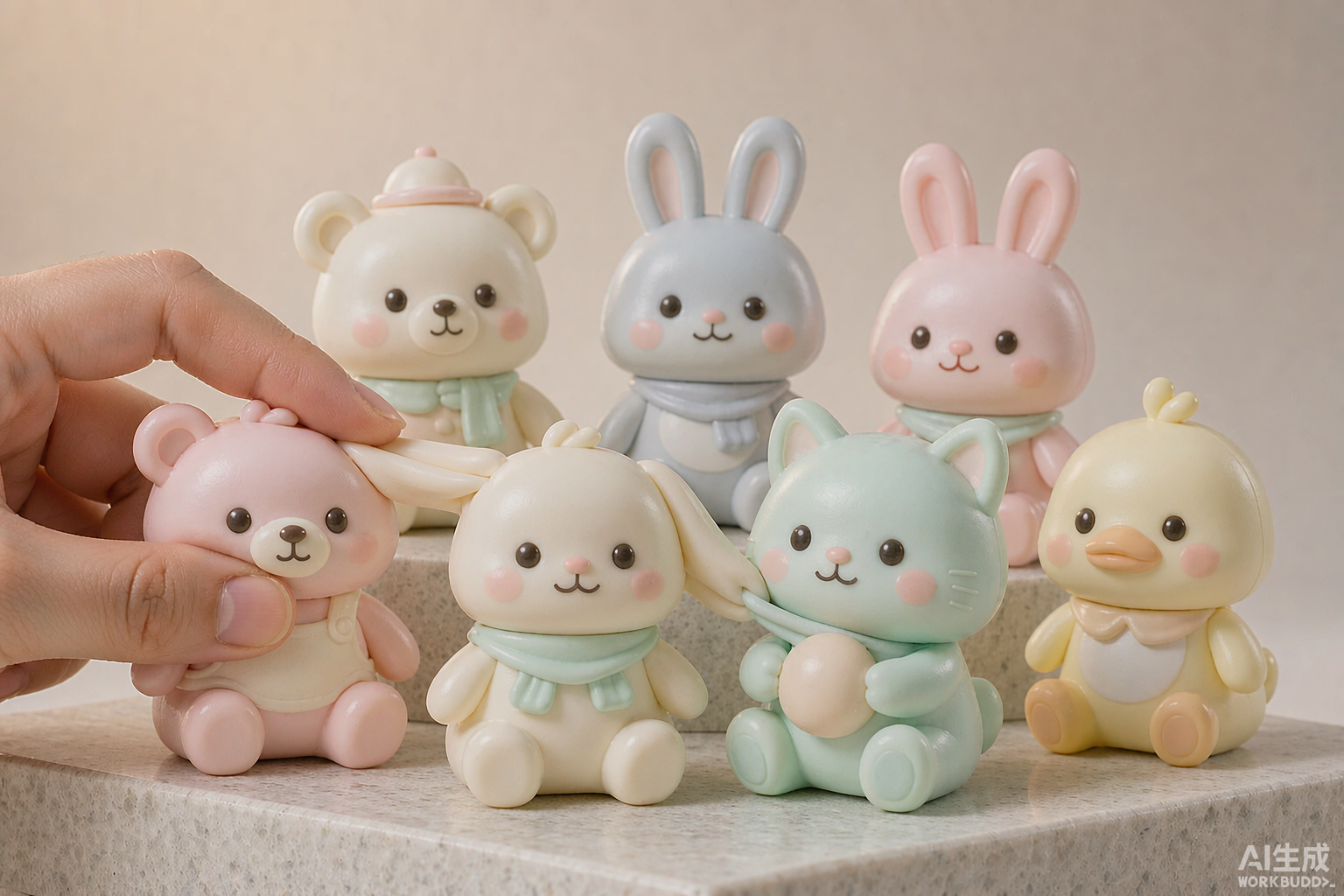
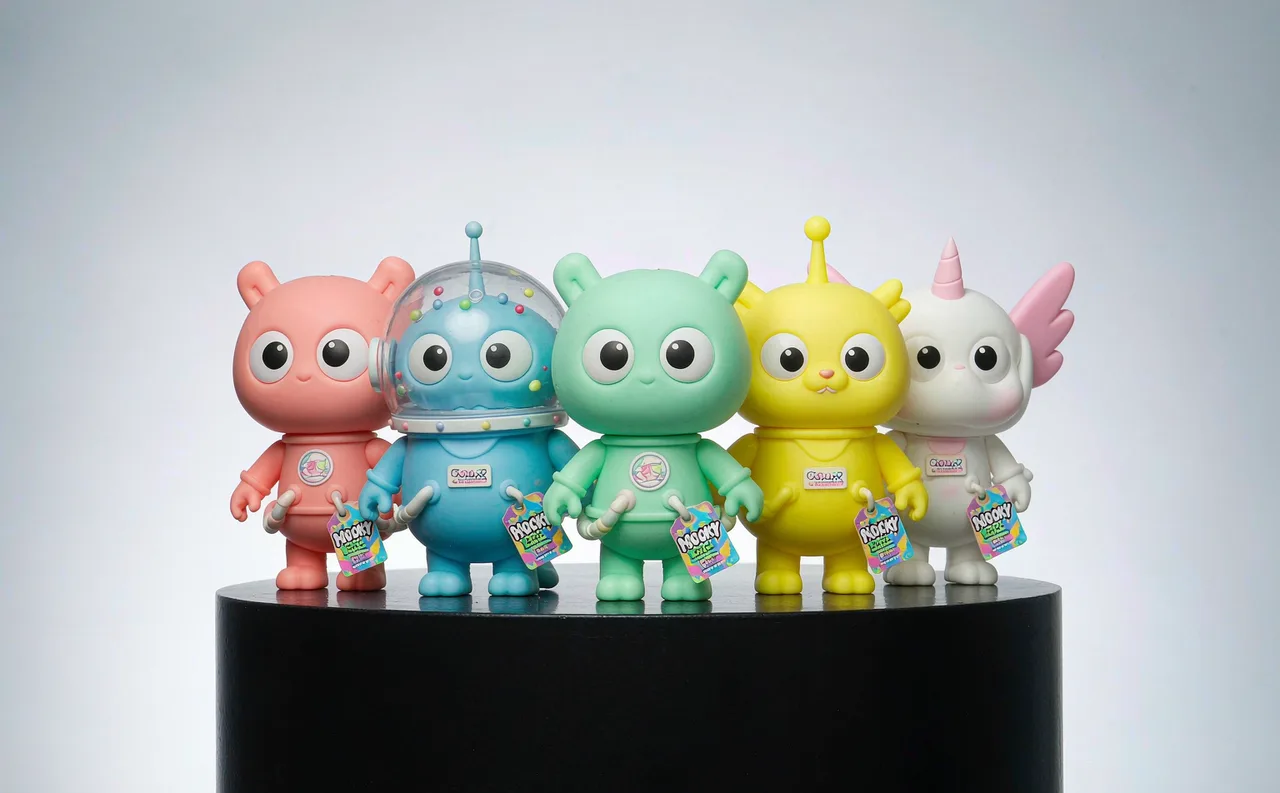
    1. Cartoon Figures / Ornaments (Most Common)


    Hardness 30~50A, it needs to "be squeezable and stand upright." Use 35A for the main body + 28A for the ears and tail to create a dual-hardness layering; for details, see the rebound design case of the same series of figures. Note that the wall thickness must be uniform within ±10%, otherwise the ears will collapse.

    2. Squishy / Slow-Rebound Stress-Relief Toys


    Following the route of "collapses when squeezed, slowly returns," the hardness can be as low as Shore OO 0~20A (or Shore A 20~30A). The core indicators are a low rebound rate and a recovery time of 1~3s; the slow-rebound stress-relief feel comes from this. The formula should have low permanent deformation and low migration.

    3. Baby Teethers / Teething Rings


    Hardness 25~40A, must pass all EN71-3 items, and must achieve no small parts detaching, capable of high-temperature disinfection (TPE withstands 100℃ boiling, superior to PVC). Choose food-contact grade, with reports covering the finished product.

    4. Stretch / Rebound Interactive Toys


    Stretch rings, stretch monsters, bouncy balls and the like rely on TPE's high elongation at break (≥600%) and rebound rate. Hardness 30~50A, tear strength at the end assembly points must be ≥18 kN/m to prevent breaking.

    5. Soft Rubber Balls (Stress Balls / Grip Balls)


    Hardness 20~40A, matte non-slip surface, can enclose bells/sand inside to make "sound balls". Note low-oil formulations, otherwise they sweat and become sticky.

    6. Pretend Play / Role-Play Soft Accessories


    "Soft eggs" for kitchen toys, soft animal foot pads, etc., hardness 40~60A, must be wear-resistant and bite-resistant. Two-color injection molding for a "hard core + soft outer layer" is the most reliable.

    IV. Why TPE Is More Suitable Than PVC / Silicone / Latex


    MaterialSafetyFeel & ReboundCostTwo-color/OvermoldingApplication
    PVCPoor, phthalates are a major flawHard in winter, slipperyLowestAverageLow-end domestic sales
    SiliconeExcellentExcellent, but rather expensiveHigh (2~3×)DifficultHigh-end maternal & baby
    LatexMedium, allergenicExcellentMediumDifficultBalloon type
    TPEExcellent, phthalate-freeGood, stable in winter and summerMediumEasy two-color/encapsulationClass 6 general purpose

    Table 4-1 Note: TPE hits the sweet spot of "safety + feel + cost + process" and is the preferred replacement for PVC in upgraded soft plastic toys.

    V. Key Parameters at a Glance


    ParameterRecommended ValueTest ConditionDescription
    Hardness (main body)Shore 25~50AISO 48 / ASTM D2240, 23℃Match by category
    Rebound rate≥45%ASTM D2632, 23℃Slow-rebound grade 20~40%
    Compression set≤30%ISO 815, 23℃×72hThe lower, the better the recovery
    Tensile strength≥6 MPaISO 37, 23℃Baseline for stretch toys
    Elongation at break≥500%ISO 37, 23℃Stretch toys ≥600%
    Tear strength≥18 kN/mISO 34-1Ends/hanging holes
    ComplianceEN71-3 / CPSIA / RoHS / Phthalates 6PThird partyExport baseline

    Table 5-1 Note: The above are typical ranges for SEBS-based TPE for soft rubber toys; refer to the TDS for specific grades.

    VI. Key Points of Molding Process


    • Injection molding: material temperature 180~210℃, mold temperature 30~50℃ (45~55℃ for mirror-finish parts), holding pressure should be short rather than long, cooling time based on wall thickness × 8~12s.

    • Two-color/overmolding: for figures with a "hard core + soft outer layer" and teethers with a "hard handle + soft bite", two-color injection molding is used; the interface should be textured or structurally interlocked to prevent separation.

    • Extrusion: stretch rings and tubular interactive toys use extrusion-grade materials; see the application cases of extruded tubes in the same series for details.


    • VII. Safety and compliance: this hard threshold


      Regulation/StandardWhat it coversKey limits
      EU EN71-3Migratable elements in children's toys (19 items)Limits by category
      US CPSIALead content + traceability labelLead ≤100ppm
      California 65Phthalates and lead disclosure obligationEach phthalate ≤0.1%
      EU RoHS 2.010 restricted hazardous substancesCadmium ≤0.01%
      REACH phthalatesAnnex XVII 4PEach ≤0.1%

      Table 7-1 Note: TPE itself does not contain phthalates; the risk lies in color masterbatches and oils. When selecting materials, confirm the oil report and require a third-party report covering the finished tube.

      VIII. Real Sampling Verification Checklist (10 items)


      1. First article full dimensions (within tolerance, wall thickness ±10%)

      2. Hardness spot check (ISO 48, target ±3A)

      3. Rebound rate (ASTM D2632, 45~65%)

      4. Compression set (ISO 815, ≤30%)

      5. Hand feel recovery time (internal control, 0.3~3s)

      6. Drop (1.2m, 1 time on each of 6 faces, no cracking)

      7. Aging (70℃×7d, hardness change ≤5A, no oil bleeding)

      8. Packaging simulation (stacking 3 layers for 72h + 40℃, take out and recover for 2h)

      9. Compliance (EN71-3 / CPSIA / Phthalates 6P / Odor)

      10. Blind test (30 pieces, target user hand feel score ≥4/5)


      IX. Five Common Failures and Countermeasures


      FailureRoot CauseCountermeasure
      Does not rebound after squeezingHardness too low / holding pressure too longHardness +5A, shorten holding pressure time
      Teether bite marks do not recoverMaterial too soft / large permanent deformationRaise to above 35A, reduce oil
      Surface sticky and whitishExcessive oil filling causes precipitationOil reduction ≤15 parts, add UV resistance
      Hardens in winterBase material has high glass transition temperatureSwitch to SEBS-based low Tg grade
      Two-color separationNo structural interlock at interfaceAdd texture/mechanical interlock

      Table 9-1 Note: For failure troubleshooting, check the timeline first—if it is present from the factory, check the process; if it appears after a few days, check the formula and packaging.

      X. How to formulate different soft rubber toys: a comparison table


      ProductMain body hardnessStructure/processKey points
      Cartoon figures/ornaments30~50ASolid/two-colorUniform wall thickness, thickened ear base
      Squishy toys/stress relief20~30A (or OO)SolidSlow rebound, low permanent deformation
      Baby teether25~40ATwo-color overmoldingFull EN71-3, boilable
      Stretch/rebound toys30~50ASolid/extrudedTear strength ≥18 kN/m
      Soft stress-relief balls20~40ASolidLow oil, anti-slip
      Pretend-play soft accessories40~60ATwo-colorAbrasion-resistant, bite-resistant

      Note to Table 10-1: Slow-rebound grades follow a different formulation logic from regular toys; do not apply the same set of parameters.

      XI. FAQ Frequently Asked Questions


      1. What is the biggest difference between TPE and PVC for making toys?


      Safe. PVC is softened with phthalate plasticizers, and for exports to Europe and the US this is a mandatory inspection item; TPE itself contains no phthalates, and with an SEBS base plus low-migration oils it can pass EN71-3 and CA65, with more consistent feel (not hard in winter or summer).

      2. Can TPE be used for baby teethers?


      Yes, and it is suitable. Choose food-contact-grade grades that pass the full EN71-3, with hardness 25~40A, and they can be sterilized by boiling in water at 100℃. The report must cover the finished product, not just the raw material.

      3. Why is very soft TPE used for squishy toys?


      Squishy toys need to "collapse when squeezed and slowly return," which relies on a low rebound rate (20~40%) + long recovery time (1~3s), corresponding to Shore A 20~30A or even the Shore OO scale. But this material and "figurines that need to stand up" are two different formulations and cannot be mixed.

      4. Will TPE stretch toys break when pulled?


      Normally it won't. Choose grades with elongation at break ≥600% and tear strength ≥18 kN/m, and simply thicken the assembly points at the ends. Breakage is mostly because the material is too soft or the end design is too thin.

      5. Will the two layers of a two-color figure come apart?


      Yes, if it relies only on "adhesion." The correct approach is to texture the interface (Ra≥0.4μm) or use a mechanical interlock structure so the soft layer and hard layer "snap" together, rather than relying solely on chemical bonding.

      6. Can existing PVC molds be directly switched to TPE?


      Most likely they need modification. TPE has a higher shrinkage rate (1.5~2.5%) than PVC and requires higher mold temperature and venting; directly switching materials often causes short shots, flow marks, and undersized parts. We recommend running 3~5 trial molds first, and we will provide a "mold modification checklist."

      Conclusion

      Back to the three questions from that factory: compliance is solved by "phthalate-free TPE + oil test reports," material selection is solved by the "6-category hardness matrix," and experience is solved by "SEBS-based winter-summer stable material." TPE is not a universal material, but it is one of the few in soft plastic toys that can A material that simultaneously covers four things: safety, soft and bouncy, cost, and process. Among the 6 types of toys, pick the one that suits you; match by hardness and run through the verification checklist, and you basically won't take detours.

      Need material selection, mold-opening evaluation, or prototyping for soft rubber toys? Send us your product type, target hardness and feel, and export market, and our technical department will recommend grades based on actual needs and send free samples.

      Related Reading


      The following articles are directly related to this content, arranged in the order of "what to read first, what to read later":


      Online Consultation


      If your soft rubber toys are also stuck on "compliance / material selection / feel," send us the following 6 pieces of information, and our technical department will give a preliminary assessment within 1 working day. Samples that need to be tested will be shipped within 3~5 days (minimum 2kg per grade, with TDS and test reports attached):

      1. Product type (figures / squishy toys / teethers / stretch toys...)

      2. Target hardness and feel (fast rebound / slow rebound)

      3. Current material grade and specific symptoms (attach photos of defective products)

      4. Mold status: already molded or pending molding, and whether the mold can be modified

      5. Export market and regulatory list (EN71-3 / CPSIA / REACH / phthalates 6P)

      6. Monthly demand and delivery time


      Contact Information


      Support we can provide: grade selection, sample analysis, mold modification suggestion list, small-batch sampling, mass production consistency tracking. We don't do "send you a grade and let you try it yourself" — the feel of a toy is made by molding, not by quoting specs.


      About the author
      This article was written by the technical team of Dongguan Juye Plastic Technology Co., Ltd. (Juye Plastic Technology), which mainly produces TPE / TPR / TPV / TPU / TPEE / TPV-SIR pellets, used in artificial flowers, pet toys, toys and baby products  sports equipment  daily necessities  power tools, stress toys, two-color injection molding and other major fields.


      The data on hardness, rebound resilience, compression set, tear strength, etc. in this article are all quoted from measured or typical ranges under standards such as ISO 48, ASTM D2632, ISO 815, ISO 37, and ISO 34-1. For specific grades, the supplier's TDS shall prevail. For material selection advice, grade samples, and quotations, please contact Ms. Zhang at 13827205072.

    Need help choosing a material?

    Tell us about your application and requirements. Our team will help you evaluate suitable grades.

    CONTACT US

    Dongguan JUYE Plastics Technology Co.,Ltd.

    No. 2, Fourth Street, Shuju Second Industrial Zone, Changping Town, Dongguan City, Guangdong Province, China
    +86-769-82827951
    Ms. Zhang
    CONTACT US
    facebook
    tiktok
    youtube
    alibaba
    wechat
    whatsapp