
English


The FAQs about TPE materials
TPE material is used for overmolding and injection bonding. TPE soft rubber serves as the soft outer layer.
Transparent TPE is applied in household appliance casings, handles, grips, etc., offering excellent hand feel, anti-slip, labor-saving, easy coloring and processing, and a wide design space.
Styrenic transparent TPE is widely used in the footwear industry, largely replacing rubber; its use in industrial rubber products such as rubber sheets and plates is also expanding.
Natural TPE Processing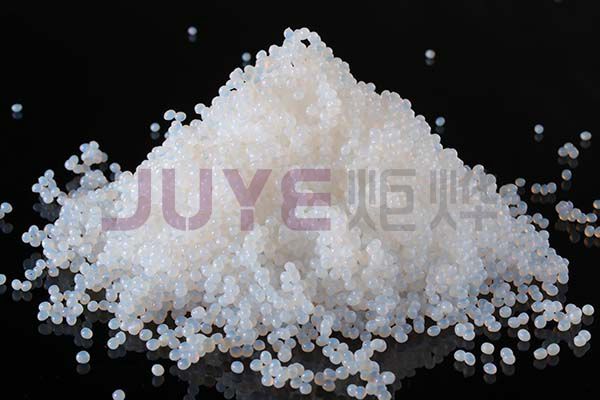
The common hard materials for bonding are mainly plastics, but also metals and fabrics. TPE bonding with fabric is mainly used for luggage products, similar to metal overmolding, generally pseudo-overmolding.
TPE overmolding and injection bonding typically use a two-shot injection process, where the pre-injected hard plastic part is fixed on the overmolding mold.
Olefinic transparent TPE has excellent weather resistance and ozone resistance, making it the fastest-growing TPE variety, mainly used as a major rubber material in automotive and home appliance fields.
Transparent TPE materials exhibit different product properties in different applications. Thermoplastic elastomer, also known as TPE material, not only has the processing properties of thermoplastics but also the physical properties of vulcanized rubber, which is the advantageous combination of plastic and rubber. Transparent TPE is widely used in people's daily life and production.
Natural TPE Processing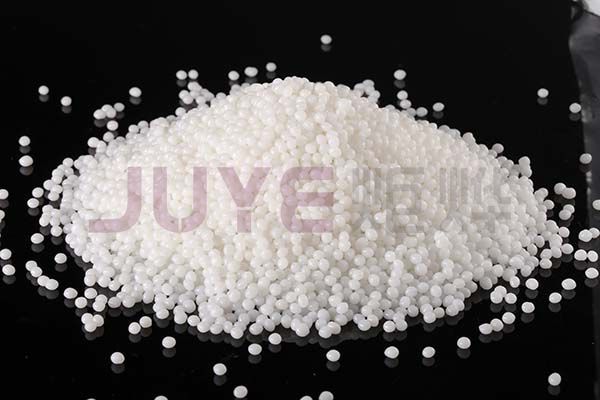
Then, at a suitable temperature, TPE soft rubber is injected and bonded onto the hard plastic part, and then cooled to obtain the product. The injection temperature for overmolding depends on the hard plastic material.
The temperature in the feed zone should be set quite low to avoid blockage of the feed port and to allow entrained air to escape.
TPE high-transparency materials exhibit different product properties in different applications. Thermoplastic elastomer, also known as TPE material, not only has the processing properties of thermoplastics but also the physical properties of vulcanized rubber, which is the advantageous combination of plastic and rubber. Transparent TPE is widely used in people's daily life and production.
The wall thickness of TPE areas should be as uniform as possible to achieve the best molding cycle. Transitions between different wall thicknesses should be gradual to reduce fluid flow problems, such as air marks and bubbles.
Natural TPE Processing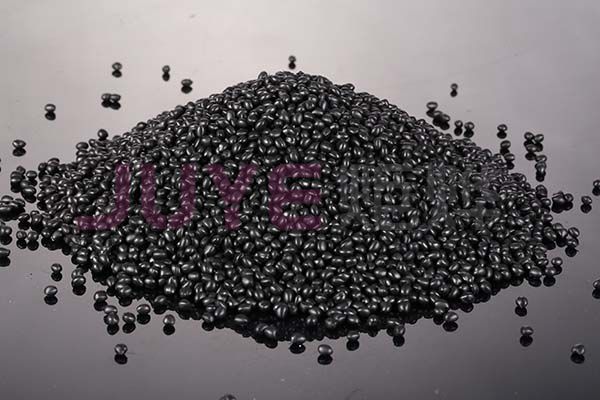
To change the mixing state, the transition zone temperature should be set above the melting point of the masterbatch, so as to change the mixing state when using masterbatch. The temperature near the nozzle should be set close to the desired melting temperature.
Start your Thermoplastic elastomer project with our expert team. Get the fastest response — often within minutes.
Available 24/7 for urgent inquiries

Factory Address
No. 2, Fourth Street, Shuju Second Industrial Zone, Changping Town, Dongguan City, Guangdong Province, China
Phone & WhatsApp
8613827205072
Tel
+86-769-82827851
E-mail
juyetpe@juyetpe.com
Linkman
Ms. Zhang
